The Fisher
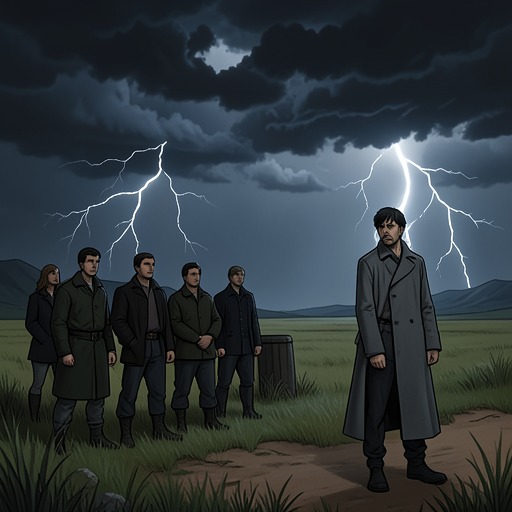
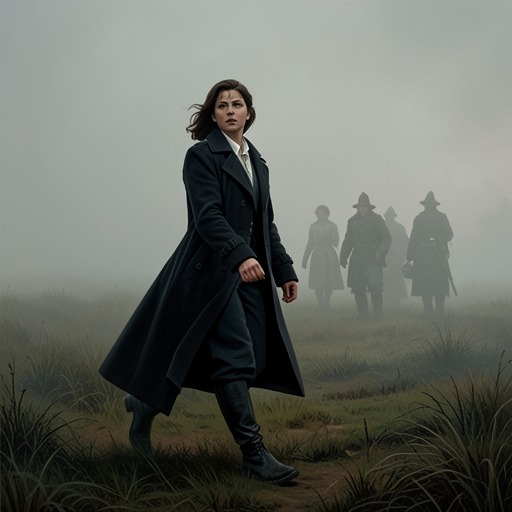
Handling the UndeadThe Fisher is a death-associated presence first encountered by Eva Zetterberg when she nearly drowned as a child, and later understood as a force that gathers souls as they leave the body. Its appearances resist a single stable shape: people perceive it through images they can comprehend, from a creature in a lake to a pursuer with hooks. That shifting form makes the Fisher less a conventional character than a collector whose approach marks the boundary between bodily life and what follows.
Identity and Childhood Encounter
Eva’s history with the Fisher reaches back to when she was seven. As Sture explains to David Zetterberg, Eva came very close to drowning, and her mother’s intervention brought her back to life. Several days later, Eva told her parents that some kind of creature had been with her underwater. Sture remembers her childhood name for it as the Fisher; as she grew older, she referred to it instead as the Waterman or simply That Thing. He wonders whether she has forgotten the earlier name, while David recognizes the figure as the presence Eva has described as coming to take her.
The name Waterman is reinforced by an illustration in Bruno the Beaver Finds His Way Home. Sture points to the blurry figure in the lake, where Bruno discovers that the place he wants for his house is already inhabited. The children’s-book image gives the otherwise elusive encounter a tangible outline: a creature beneath the water, occupying a world that Eva had brushed against and survived. Yet the illustration cannot settle what the Fisher is. It records a recognizable figure, not a definitive account of the power behind it.
A Form Shaped by the Witness
The Fisher’s appearance belongs to a wider pattern in which death takes a form that makes sense to the person encountering it. After Peter thinks of death as a wolf, Flora recognizes that her own long-standing imaginative idea—that Death is her twin sister—is not merely play. The idea began years earlier when she tried to summon the Dark Lady in front of a mirror by candlelight and saw only herself. Her double is therefore at once an intimate image and something beyond ordinary human identity.
During the courtyard crisis, Flora sees that double moving toward a heap of corpses. The other figure mirrors her gestures, spreading its arms as Flora does, then bending over the bodies with small, plucking motions. When their eyes meet, Flora recognizes her own eyes in the figure, but also understands that resemblance does not make it a human twin. The encounter gives visible form to a force that gathers what is leaving the dead. The hooks associated with this collecting are not presented as literal anatomy: the figure’s appearance is an image people can grasp, while the collecting power is the more fundamental reality.
The aftermath makes the distinction between a body and the person who inhabited it starkly visible. White caterpillars emerge from some of the burned bodies. Only seven appear, although around fifteen people were in the heap; the narration says the others were taken. Flora understands the caterpillars as the human element in those people, made visible in a form that can be comprehended. The collector’s work and the caterpillars’ emergence are thus related but not identical outcomes: some remnants become visible, while others are gathered away.
The Pursuit of Eva
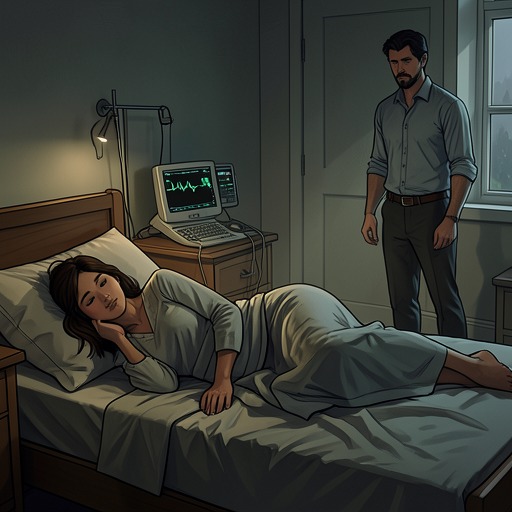
When Flora confronts Eva’s failing body, the Fisher approaches as the soul nears the surface. Flora tells Eva that there are two ways out of the body: souls may be collected, or they may disappear. The words pass through Flora rather than seeming to originate with her. As the Fisher begins to descend toward its catch, Eva breaks free before it can fully take shape or claim her. She escapes as a disembodied spirit, leaving her body collapsed at Flora’s feet, and the Fisher continues its pursuit. The moment connects Eva’s childhood encounter with her final separation from her body: the creature she once met underwater is again waiting at the threshold, but this time she gets away.
Limits, Manifestations, and Narrative Significance
The Fisher’s power has a clear limit: it cannot touch the living. David encounters that boundary after a dream of reaching toward Eva collapses and he wakes in Magnus’s bed. A white caterpillar lies curled on his stomach. Beside him, the Fisher takes the form of a woman associated with a grocery store; David recognizes cheap perfume and a glimpse of pink, then sees a bracelet-covered hand whose fingers end in hooks. The hooks stop short of his hand because he is alive.
The caterpillar communicates a plea for release through David’s body, but he cups it in his hands and refuses to let go. His response sets the Fisher’s role against the living person’s capacity to withhold what the collector seeks: the presence can approach, display its hooks, and wait, but cannot simply seize David. The scene also links the Fisher’s varied manifestations to the story’s recurring image of death as a presence encountered through intimate, personal forms. A lake creature, Flora’s reflected double, and the woman beside David’s bed do not establish one stable appearance. Together they suggest a force whose task is constant even when its face changes: to gather the dead, while remaining unable to cross the boundary into the living by force.